Friday, December 3, 2010

Gilly’s Christmas Playlist ’10 -- Track 2: “And On That Day” - Phil Keaggy


Loving and Lightbulbs

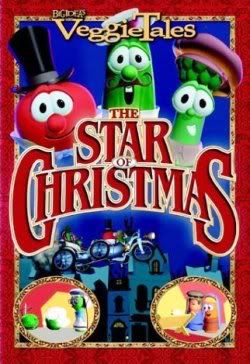
I was doing some work from home this morning while my daughters watched VeggieTales: The Star of Christmas. I’m a huge supporter of the creative and ministerial duo that is Phil Vischer and Nawrocki, but this wasn’t my favorite of their Christmas repertoire. However, this time, I overheard a line from the dialogue that really stuck with me.

In the basic premise of the story, Bob the Tomato and Larry the Cucumber play Cavis Appythart and Millward Phelps, two musical playwrights in late nineteenth century London. It’s Christmas season, and they’re struggling to produce a blockbuster. Meanwhile, a nearby church is producing a Christmas pageant, featuring a special relic known as the Star of Christmas. The church is unknowingly making itself a competitor and finding itself in the crosshairs of the two aspiring playwrights, who successfully steal the Star of Christmas. (More spoilers ahead). It was the day before opening night, and it seemed the playwrights’ desperate actions were fruitful. But then a technical mishap started a fire which burned the theatre to the ground, and the two were arrested for their theft.

Though the now-imprisoned Appythart’s ethics and intentions were questionable at best, he still was making a soliloquy in his cell about how he had only hoped to “teach London to love.” The playwrights‘ cellmate, a longtime prisoner, inquired of them. When they told him of their production goals, he laughed uproariously and said, “You’re teaching London to love, with lightbulbs?”

It was a hard thing for me to realize in my studies to be a pastor in music. All the music, art, technology and general pizazz of a church have their limits. The resourceful Willow Creek Community Church well-developed the method of such an “attraction-al” church to grow its attendants and increase its ministry, but (as they probably will agree) it seems that approach has passed its prime. Ironically, as I’m serving in ministry now, I feel like I’m having to help people unlearn the consumer-like tendencies which the “attraction-al” church era had fueled so well.

All I want to do is teach London to love. And lightbulbs are useless.

But I learned a while ago to see beyond the lightbulbs of Christmas and into its true meaning. Christmas (literally meaning “Christ’s mass” or “Christ’s coming”) is God’s gift of love, and Christ commanded us to love definitively for Him (John 13:34-35). In essence, we are to “teach London to love.” Maybe not London, per se, but our neighbor (Mark 12:29-31). But lightbulbs won’t do that. We need to live and love by example.

Lightbulbs are pretty. Music can sound angelic, but if we don’t have love, it all turns into resounding gongs and clanging cymbals (1 Corinthians 13:1-3). Maybe that’s one way we can model the original Christmas, by teaching love.

And On That Day - Phil Keaggy

I remember one day my Christian elementary school was having a little book sale, and I spotted a Christmas collection two-disc set and snuck it into my mother’s shopping bag. It’s since become the prominent Christmas musical listening tradition in our family. This song is track 2.

While endorsements from Jimi Hendrix may be an old wives’ tale, Phil Keaggy is widely praised for his guitar skills. However, his technical skill doesn’t show so much in this track as does his devotion and gentle passion as a singer and songwriter. His voice is gentle, and his words avoid much “Christian-ese.” My favorite line from the song is:

“And on that day was put in motion/the means of our redemption”

Friday, November 26, 2010

Gilly’s Christmas Playlist ’10 -- Track 1


Really, How Should We Celebrate Christmas?

Why and how do we celebrate Christmas? Each year, how do we acknowledge the unprecedented notion of love and connection that a God would step down from the sky into human flesh to help His people?

We all have an answer, sometimes a proud one, and the answers are very diverse. Even in a society that has long allowed workers and students to stay home to celebrate this certain holiday, there is deep disagreement on the basic questions of how and why. Otherwise, there wouldn’t be, for example, bumper stickers that read “Keep Christ in Christmas.”

Last year, the musical fad was Andrea Boccelli, as he brought his rich voice to a very unoriginal yet gaudy production of Christmas carols, from the poetic meditations on Christ’s birth (which few understand or appreciate) to shallow and playful songs like “Santa Claus is Coming to Town,” which he sang on PBS while surrounded by a bunch cute winter-bundled lip-syncing kids with braces.

More interesting last year was the seeming assault on the staunch materialism of Christmas in our society. I was then involved in a church plant, for example, which was going through the materials of Advent Conspiracy, an international movement looking to restore Christmas again to be “world-changing,” challenging the materialism and stinginess of typical Christmas giving and encouraging Christians to give compassionately as Christ (in his birth, life and essence) would give: to the poor and needy (in all forms of the words).

This idea was not limited to the church. Starbucks gave an increasing portion of their proceeds to help the AIDS crisis in Africa, and gave a free CD with any purchase of $15 or more. Talk show host Stephen Colbert wrote and performed “Another Christmas Song,” lyrics of which are a brash parody against how the commercialization of Christmas has jumbled or ignored its history and tradition and even blinded us to the Tiny Tim’s of the world. The bridge reads:

“Young ones starving on a dead-end street
Taped up tabloids on their frost-bit feet
Hear what they carol as they huddle for heat”


I think this theme (rightfully) should somewhat return this year.

In our strive to be like Jesus, if we were to model our celebration of Christmas based on the original event, the beginning of Christ’s physical presence on earth, what would it look like?

We’ll go further next week.

---------------------------------------------------------------------------------------

“The Wexford Carol” - Yo-yo Ma & Allison Krauss


I actually found this song two years ago from a “free iTunes pick” redeemable card. Ma uses his well-recognized cello skills to achieve a Uillean pipe-like tone, along with some guest instruments, to bring the tune back to its Celtic roots. Allison Krauss steps out of her typical folk and country self and brings her substantive straight tone to the table. The lyrics are a poetic delivery of the narrative of the Christmas story, and they open with a seeming call to worship for any Christmas season:

"Good people all, this Christmas time,
Consider well and bear in mind
What our good God for us has done,
In sending His belovèd Son."


Wednesday, November 24, 2010

Ode to Chai


I haven't yet sent an application to The Food Network, but my primary (actually, only) area of (remote) connoisseurship is that of the chai tea latte. In the past half-dozen years, it's risen from a mere curiosity to my first-choice purchase at a coffeeshop, should they have it . . .

Living on a college dorm floor that was brimming with proud traditions, I was first introduced to chai in a little live music and coffeehouse setting on my floor known as Chai Lounge. It was in raw teabag form, black, hot and homemade, and very disgusting. Still, under peer pressure and wanting to honor my dorm floor's tradition, I forced myself to finish the whole cup.

It was actually because of the working man's need for caffeine that I further acquainted myself with the chai tea latte. With few exceptions, I don't acquire taste, which is why I struggle to gulp all forms of alcohol and coffee (yes, even after working at Starbucks for three years). Nonetheless, I needed a source of caffeine to energize myself for those 4am shifts at Starbucks and to prevent the headaches that would likely follow. Chai tea lattes to the rescue.

I prefer my chais with a complementary flavoring. Cinnamon, caramel and nutmeg help to make the chai concentrate, so additional flavoring would accentuate. Peppermint and toffeenut do well to tag along with chai's little tang, whereas vanilla, hazelnut and white chocolate tend to over-sweeten. Chocolate and coconut are love-it-or-hate-it, and fruit syrups or juice blends have never worked for me.

Stores vary greatly on how many or few options for chai are available. Tea bag? Latte (with tea bag or concentrate)? Blended with ice? Mixed with fruit juice? Unsweetened or only sweetened? I've yet to go to many stores, but I've been to a few. Here are some reviews:

Starbucks arguably has dominated the tea market among chain coffeeshops, primarily due to their business with the popular tea manufacturer, Tazo. Also, being my longtime employer, I've had a lot of exposure to their chai. It seems that the non-resale concentrate Tazo delivers to Starbucks is better than any other chai Tazo produces (e.g. the concentrate available in boxes at Barnes & Noble). It has become my standard for the right balance of sweetness and tang in the taste of a chai tea latte.

Caribou, for those unfamiliar, is growing chain of coffeehouses based in the Minneapolis metro and expanding to the Midwest and West. Their appeal is their more laid-back atmosphere and lodge-themed and serene interior design, contrary to the trend where quiet and peaceful coffeehouses become quick, loud, come-and-go fast-food joints. I find their chai a bit disappointing, however.

Below is a growing list of places where I've had a chai tea latte. Reviews are available upon request, as rare as requests may be. Operators are half-heartedly standing by.

Atrium Tea Room (Sheboygan Falls, WI)
Daydream Cafe (Sheboygan Falls, WI)
American Club place (Kohler, WI)
Weather Center (Sheboygan, WI)
Panera (national chain)
Chocolate Chicken (Egg Harbor, WI)
Brew-Ha-Ha! (regional chain, DE)
South Bend Chocolate Company (South Bend, IN)

Saturday, September 18, 2010

My Underlying Hipster-dom and How It's Not What You Think


Recently, Christianity Today, a magazine I’ve long respected and read, released a cover story on hipster Christianity by Brett McCracken. My wife was able to read through the article before I was, and, before I started reading it, she told me she felt we were very much “hipster Christians,” in terms of what we value.

After I read through the article myself, I realized that, strangely enough, we only fulfill less than half of the ascribed stereotypes in the article. Sure, I have a goatee and a Mac, and I like to work and meet in coffee shops (I only drink tea, even), but we have two little daughters and are settled down in an otherwise seemingly non-hipster lifestyle. What gives?

Having read other reviews, McCracken’s very definition and understanding of hipster Christianity is actually seen as incomplete and disorganized (is it a matter of style or belief? He doesn’t seem clear). I’m far from a sociologist or cultural analyst, but I feel that, while McCracken was able to give surface-level caricatures and some possible interpretations of “hipster-dom,” he did not accurately (or positively) portray much of an amount of the underlying values of a Christian hipster. Many of such are the values with which I resonate, based on my journey in ministry and my experience working with fellow hipsters.

Same as Always, Cultural Packaging is Bad

The driving question of Brett McCracken’s earlier book on hipster Christianity is: “[A]s messengers of Christ, are we to let the message speak for itself or must we adapt and package it for a specific context?”

What’s annoying to me is that this is not a new question. It was asked when Bill Hybels began Willow Creek’s “seeker”-oriented approach. It was asked when the pioneers of Christian rock music like Larry Norman and Petra emerged decades ago. I imagine this question could be traced back through many cultural shifts and ministerial innovations. It perpetuates because those who ask it fail to realize the following reality. “Packaging” is inevitable.

Jesus himself used parables dominated with agricultural metaphors and similes, knowing that his audience had a vast majority of farmers or those who understood the proverbial ropes of farming. Was He, then, guilty for “adapting and packaging” the message for a specific context?

Every delivery of the Gospel comes in a package. Even if you strip the packaging as much as you can by, for example, walking up to a complete stranger on the street and reading them the “Romans Road,” the message is still packaged by the translation used, the overall context of your delivery, your personality and self, etc. I could go on.

Yes, if the core message of the Gospel (not any cultural or theological addenda) is being compromised in the process of said packaging, then red flags should be raised. But packaging, in and of itself, is not wrong.

The question, actually, can easily reveal dangerous bias. Missionaries, for example, will utilize ethnomusicological studies to help put sacred text, liturgy or Scripture to the indigenous music of their mission field (which perhaps was previously used, by the way, for pagan rituals). Their ministry instantly becomes more effective. Christians in the States are very supportive of that method overseas, but when local believers seem to do similar for the sake of a subculture of a musical style which makes many uncomfortable (because of the actual musical approach and/or the philosophical/cultural connotations, as people often have trouble separating the two), there is little-to-no support. Rather, this typical and timeless question gets asked, biases are revealed and, as I’ll get to later, the very core intentions of those trying to fulfill the Great Commission are cynically questioned.

When you have two different packages delivering the Gospel without compromise, to assume one type of package (perhaps a longtime or familiar one) is “letting the Gospel speak for itself” and the other is wrongfully “adapted and packaged” only reveals one’s own preferences and potentially shows a belief in an en-cultured Gospel.

Just Trying to Be Cool and Rebellious?

The aforementioned doubting of intention has also been a common thread in all criticisms of “rebellious” movements within the Church.

It’s all a marketing ploy.

Just like all the other movements, this is just an effort to make church “cool,” completely submitting oneself and identity to the consumerist culture, “rehabilitating” the face of the church to fit an image more likable by disgruntled churchgoers and those they’re trying to reach.

Really? To virtually generalize the background of Christian hipsters, belittle ministerial intentions, and reduce their whole approach and philosophy into sounding like a selfish marketing strategy is a bit insulting, to say the least.

As a pastor and a service producer, I need to clear the misconception that there’s a fine black line between church outreach/evangelism and marketing/advertising. It’s actually a very gray and muddy line with overlap. People use marketing and advertising techniques when conceiving outreach initiatives and even sermons, and that’s okay. Where it crosses out of bounds and into the strive for “cool” is measured by intention. As McCracken himself estimated in another ranting article (this from the Wall Street Journal), the generation hipster churches are trying to reach doesn't “want cool as much as [they] want real.” And again, intentions are cynically (and unfairly) doubted.

Again, I can’t speak for all hipster Christians, and there are churches out there that do, in fact, callously dedicate their resources and energy to appeal and attract, all the while arbitrarily disregarding all church heritage, association, and biblical values, also letting the core of the Gospel and deep relational discipleship to be shallowed and watered down. Those churches need to heed some of McCracken’s allegations. But to consolidate, over-simplify and stereotype all culturally and philosophically dissenting movements (not just hipsters) within the American Church since the Baby Boomers into one box of rebellion, immaturity and ulterior motive is highly inaccurate, judgmental and unnecessarily divisive, and it’s what McCracken seems to do.

(I once remember reading a submitted complaint in Campus Life magazine, claiming that the Christian latin/rapcore group POD simply dressed in black, etc. to “attract” the secular crowd. It didn’t occur to this reader (and many others) that POD was not, in fact, home-grown clean-cut Christians “converted” to a certain culture (which is what McCracken seems to assert for all hipster Christians). Their frontman, Sonny Sandoval, for example, grew up in the gangs-and-drugs street life of San Diego. His musical preferences, lyric-writing, appearance and testimony are not an act. They’re all very real.)

In defending intentions, another reviewer of McCracken’s book (a writer for Wunderkammer Magazine) put it this way:

“ . . . it is not apparent whether these themes among younger Christians testify to a longing to be cool or indicate maturation. For example, McCracken devotes one chapter to social justice because ‘Christian hipsters’ have an ‘activist core.’ But does their interest in justice have anything to do with being a hipster? Or is it evidence that young Christians are rediscovering the importance of being a voice for the voiceless and taking seriously Christ’s call to be his hands and feet? Are young Christians reading Thomas a Kempis, Flannery O’Connor, C. S. Lewis, Henry Nouwen, and Marilynne Robinson because they are hipsters? Or do they read because they are hungry for beautiful and wise works of literature that will nurture their faith? Are young Christians demanding a more nuanced understanding of art because that is what hipsters do? Or is it that they are coming into a fuller appreciation for the complexities of the gospel and how they relate to creativity?”

Hipsters do have ministerial intentions, and their approach could also be out of a type of cultural celebration, not adaptation. And maybe Mark Driscoll could be talking about sex from the pulpit because he believes it’s something the church should further address, not because it’s a shock tactic to help fill the pews or rack up the website visits. The historical Church made great strides in evangelism when they hopped on board with the Romans’ roads, Koine Greek, and the printing press, but now parts of the American Church are doubting the productivity in the use of Twitter and Facebook.

Words That Shouldn’t Exist

McCracken also seems to have a particular pet peeve regarding buzzwords.

Yes, I would describe myself as “missional.” And I would describe the services that I produce and the sermons I write as “relevant.” I don’t like these words, though, and I wish I didn’t have to describe myself as them. I wish these words didn’t exist. They shouldn’t have to, but they do.

When a preacher, teacher, or any Christian looks at the revelatory, ingenious and transcendent essence of Scripture, is there really any effort at all necessary to “make it relevant” and applicable to people’s lives? From the poetry and stories of love and hope in the Old Testament to the stories of healing, rescue and commission in the New Testament, isn’t Scripture inherently relevant? And aren’t churches supposed to be inherently “missional”? Isn’t that part of their denotation and purpose? To me, the phrase “missional church” sounds redundant.

My Journey to Hipster-dom (Which Didn’t Happen as McCracken Would Guess)

Like hipsters, I have roots in a Christian home. Like McCracken, I have roots in the Midwest and an alma mater at Wheaton College. But I don’t feel that my journey to hipster-dom actually consisted of a conversion to hipster-hood.

I was a musician before I was a Christian, studying composition at Wheaton’s Conservatory of Music, ready to dedicate all my energy to the excellence and diversity of a worship arts department. The studies at Wheaton in philosophy of the arts, ethnomusicology, church music history and the general feast of music inspired me toward a musical holistic form of worship, hence what many see as my atypical taste in music and worship (with no particular fondness for Ancient-Future worship, Over the Rhine, Sufjan Stevens or anything necessarily “different” as stereotype would have it)..

Discarding my previous and immature (for me) vocational dreams of Christian rock stardom or film music composition, I felt called to bring my love for and training in music and the arts to Church. I felt, to better be qualified for serving the Church, I would go to seminary to learn more about theology, church history and practice, philosophy of worship and, of course, a deeper study of the Word.

God used my seminary experience to imprint the mission of the Church in my heart. I was so inspired, particularly, by the stories and ministry philosophy (not so much the liturgy and music, as stereotype would have it) of the apostolic fathers. I was awed by how they were able to change countless lives, despite governmental oppression and false teaching, in an ancient and larger version of Las Vegas. Their aggressive compassion, charity, social work and martyrdom-willingness fueled their evangelism like gasoline to a wildfire.

In essence, my “new” vision for ministry didn’t base from a rebellion, rather a rediscovery of the ways of old, arguably a renaissance.

Call to Unity?

Having been trained also for church planting, having served in church plants and emerging churches, I know my story is not a rare one among whom McCracken would describe as hipsters or those with hipster values. Many such hipsters, upon sharing this adventurous and biblical vision for ministry, face, for whatever reason, a lack of support from churches and feel (ironically, as some would think) betrayed. Some hipsters break off from the Church in their association (hence some rebellion). Others stay and try to seek unity (hence me).

St. Augustine is famous for his purposefully paradoxical quote, “The Church is a whore, and the Church is my mother.” I’ve seen dissenting churches and movements only acknowledge the former, while those who they seem to rebel against only acknowledge the latter. The mature Christian will acknowledge both, and not stop people from driving out demons in Jesus’s name (Mark 9:38-41).

As a pastor, I strongly value the cultural transcendence of the Gospel, cultural engagement in ministry, and aggressive charity and evangelism, not so much relying on political clout but God’s empowerment. Outer appearances and other characteristics don’t stereotype me as a hipster, but do these biblical values distinguish me as such?

My hope is always for unity under the common purpose and value: the cause of the Gospel. It’s the words of some hipsters and McCracken that only seem to divide.

Tuesday, August 24, 2010

Glory from Dishonor: How I Worshipped While Playing the Bad Guy


My college’s choir (myself included as a bass) once had the great experience of singing George Handel’s Messiah, arguably the most famous work of sacred choral literature, in a professional setting. The conservatory where I was a student pulled out all the proverbial stops (bringing along all the choirs and the esteemed orchestra) and our very own renowned baritone was a soloist among the three other soloists who had traveled from outside the country, taking time away from their involvements in operas and other opportunities. The conductor was a famous alumnus who had brought along with him a few friend professional string players from his home in Paris.

Now, one wouldn’t have to be a nerd, per se, but if a conservatory student didn’t have at least a strong appreciation for the intricate details (theory, history, etc.) of classical music, it would have been a very boring curriculum. This being a Christian conservatory, many were also finding it to be a worshipful experience. Never before had many of these young followers of Christ participated in such a large professional ensemble working on a well-written yet complex musical interpretation of the life of their Savior. The finished work, as an act of worship, was arguably a taste of the grandeur of what some might think music sounds like in Heaven.

Myself, I was pouring through the text throughout rehearsals. It is pure Scripture, verbatim, and learning the various connections to the Old Testament and other interesting aspects of Charles Jennens’s libretto made this quite the devotional experience. I’d encourage anyone to look through it before and/or during a listening.

So, what was the most powerfully moving or worshipful portion of Messiah?

Perhaps, for some, it was the opening chorus of Part II, the glorious introduction of Christ as ultimate savior, as announced by the outspoken and feisty John the Baptist in John 1:29b.

“Behold the Lamb of God, which taketh away the sin of the world.”

For many, it likely was the chori that spoke of Jesus as the suffering servant of Isaiah 53:4-5.

4Surely he hath borne our griefs, and carried our sorrows: yet we did esteem him stricken, smitten of God, and afflicted.
5But he was wounded for our transgressions, he was bruised for our iniquities: the chastisement of our peace was upon him; and with his stripes we are healed.


After all, it was barely a year after the headlining and controversial film by Mel Gibson, The Passion of the Christ, had reached theaters, so many singers and instrumentalists still had those gripping but historically-accurate images of Christ’s atoning sacrifice in their minds.

For me, it wasn’t the ever-so-popular Hallelujah Chorus, although our college had an annual tradition to sing that during the last chapel session before Christmas. The grand finale chorus that quotes Revelation 5:12-13, giving the highest glory to Jesus Christ as the sacrificial lamb and His freeing work, actually came in a close second.
It was rather the chorus where a suffering Christ seems to echo the poetic theodicy of the most Israel-famed member of his own genealogy, King David. There are several connections between Psalm 22 and Christ’s passion, and Messiah included Psalm 22:7-8.

7All they that see me laugh me to scorn: they shoot out the lip, they shake the head, saying, “8He trusted on the LORD that he would deliver him: let him deliver him, seeing he delighted in him.”

Verse 7 is a tenor solo. Verse 8 is the chorus that we were singing, and the theme of ridicule with which the soldiers and scoffers plagued Jesus during his physical torture.

That’s right. My most worshipful movement of Messiah was playing the musical role of the outright cruel and sacrilegious. Why?

Messiah, to get a bit technical, is a narrative, which, other than a musical or an opera, is the most musical form of story-telling. The prophets’ in their foretelling, and the actual people who were involved in Jesus’s life and the portion that wrote about it are the characters. My role was the villain.

Playing the bad guy gave me a powerful glimpse into the hostility and suffering that Jesus faced on our behalf, being tortured by these men. No doubt Jesus could see the passionate and energetic fire of Satan in their eyes. Satan was doing what he’s always done: instilling painful self-doubt and discouragement to anyone holding faith and taking action in God’s purposes. For me to not give this role justice is undermining to Handel’s work and downplaying of the suffering that Christ went through. Playing this role well was seemingly an act of worship leadership.

For him to overcome such emotional and physical torture, what strength! On our behalf, what love!

My assignment to seemingly sing against my Lord turned, actually, into an unexpectedly deep and meaningful worship experience, as it was for those watching all the actors play their respective roles. It was a lesson, for me, that God was seeking from me a more holistic type of worship. A worship that better understands God’s identity and will by seeing Him through different perspectives, and by operating through different mediums.

For once, playing the role of the devil’s advocate was honoring to God.

Monday, July 12, 2010

Top Ten Things We (as Big City Metro Folks) Like About Sheboygan County:


10) “Rush hour”? “Congestion delay”? What's that?
9) It smells like a pleasant lakeside camp resort, all the way to Falls.
8) The low price of milk. I suppose there’s an abundance.
7) There’s always at least a few cows or horses to point out to our children from the highway.
6) The passionate sports fans. Oh, how I’ve missed taking part in rivalries with class. (P.S. Are you really going to let the treachery of one good player alter a 90-year-old rivalry?)
5) Lake Michigan scares away many bad storms.
4) Food. Especially if it had any connection to a cow.
3) All-around access . . . to the Lake, Milwaukee, Chicago, Door County, Green Bay . . . not that I’d want to visit the latter.
2) We didn’t have to give 5 proofs of address and ID and a pint of blood for library cards. Oh, there’s the Lake again. Isn’t it beautiful?
1) The welcoming small-town values community!

Thursday, July 1, 2010

Freedom, Like All Gifts of God, Must Be Generative


“I am an American.” I still remember the months after September 11, when the Ad Council released the message where Americans of all nations, regions, customs and accents proudly make that self-statement. At the end, the screen shows the Latin phrase “E pluribus unum,” translated, “Out of many, one.” Some say that it was a message to unite in light of the terrorists' attacks, but I thought it was also a reminder of the vision that the founding fathers had for this country all along: a land of freedom and justice for all, where basic human rights are not denied. People that haven't fought for freedom or tasted and experienced a lack of freedom have trouble understanding the beautiful essence of that vision.

I feel I've grown to know a lot more about my heritage as an American in the past few years, learning more about that vision. I first learned about American church history under Scott Manetsch, and last year I was delighted to become familiar with the works of David McCullough. Despite the mistakes in our imperfect humanity throughout history, I've come to more appreciate the freedom I've been given in this country, and for the vision.

I think the proper response goes further, though.

Last summer, my wife and I came to know the work and words of Randy Singer. Being a lawyer, an author, and a pastor in Virginia Beach, he's quite passionate in his work and words when it comes to all types of freedom and justice for all. In a recent sermon he delivered on a July 4 weekend, he opened by saying, “When it comes to freedom, many Christians here in the U.S. think that their job's done.” He went on to talk about how many other peoples in other parts of the world still have yet to experience the freedom we have.

This past Memorial Day, I posted, “perhaps the best way, as a Christian and an American, to honor and thank those who died for our freedom is to seek the freedom of others.” It was “liked” by a variety of people. It's debatable to an American whether or not it's our business to seek the freedom of other countries, but it seems plain and clear to me as a follower of Someone who continually frees me: the job's not done. I need to seek the freedom of other individuals.

Freedom for all those in China who can't proclaim or even know Christ for fear of the government.
Freedom for the little grammar-school orphan girl in Romania who, in a developed response to mission work and charity from a team I served with, offered herself sexually.
Freedom for all students and scholars in Canada, where Christianity's designation as a religion continues to threaten and debunk its accreditation.
Freedom for all those in Port-au-Prince, who were oppressed and impoverished even before the earthquake arrived.
Freedom for all the single mothers in Uganda, who usually lose their home, their money and all their children's hopes for education due to illegal property seizures.
Freedom for the growing number of teenaged prostitutes in the United States.
Freedom for all the villages across the globe with contaminated drinking water, as water-borne illness fatalities have now surpassed that of all wars.
Freedom for all the poor children in India, forced into sex trafficking.
Freedom for all the spiritually-confused in South America and the Middle East, and freedom for all the spiritually-dead in North America, Europe and Japan.

Believe me, I'm grateful for the freedom I've been given as one born in America. My wife's late grandfather was one of the brave souls who stormed the beaches of Normandy and brought home some sand in a jar. The fact that I can proclaim what I believe as a Christian without fear of prosecution or arrest is a wonderful amenity to one who feels called to be a pastor, as well as my inalienable rights. These are privileges that our founding fathers (of the Church, not our country) didn't have, and they still brought the freedom of Christ to many lives.

But I can't help but also think of the freedom that Christ gave me with His death on the cross and His redemptive work in my life. We can all name the various metaphorical slave traders of our modern day. We ought to continually seek our freedom and the freedom of our modern day slaves.

Faith is a gift from God. Once we receive it, we're called to develop it in others. (Matthew 28:19-20)
Feeling loved by God, we're called to love others. (John 13:34)
The best form of leadership is the type that develops other leaders. (1 Timothy 4:11-15)
Having been given freedom, we're called to seek the freedom of others. (Prov. 31:8-9, Gal. 2:10, Jas. 1:27)
Like the old hymn says, “You want to pass it on.” (1 Peter 4:10)

This Independence Day, I'll be counting my blessings as an American Christian and renewing my vows to preserve the vision of our Founding Fathers. But I'll also be celebrating my freedom. All of it. And I'll be contemplating how I can seek to share it with those who still need it.

Because the job's not done.